Your child's first steps into how technology works
Playful, hands-on classes in computational thinking, creativity and problem-solving — before they ever need to write code.
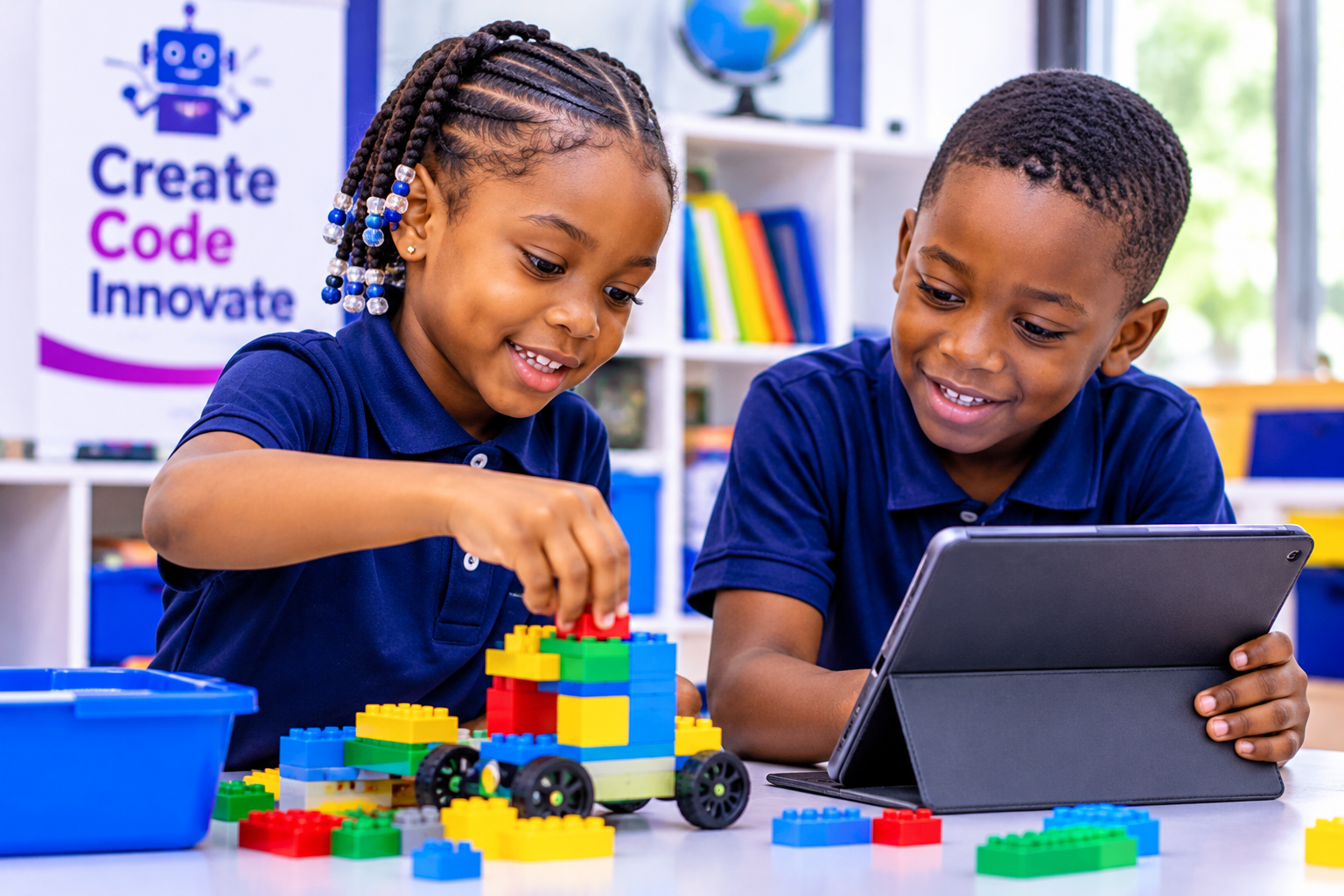
Where every Querytech journey starts
Foundation is the first of seven stages. Children learn to think in steps, spot patterns and build things that work — skills that carry into every subject, whatever path they take later.
Why parents choose Foundation
Learning through play
Games, stories and building challenges — screens are a tool, not the whole lesson.
Small classes
Every child gets attention from a trained facilitator, every session.
You see the progress
Attendance, released work and term reports in your parent portal.
A clear next step
Foundation leads straight into Discovery, so learning keeps building.
By the end of Foundation, your child can…
Outcomes are assessed with observation checklists in every term, and shared in your term report.
- Break a problem into small, ordered steps
- Spot patterns and use them to predict what comes next
- Tell a story or build a simple game with block coding
- Explain how they fixed something that didn't work
Foundation programmes
Pick the one that fits your child's age.
Little Explorers
Early digital literacy and computational thinking (ages 5-10)
ExploreStory Coders
Early digital literacy and computational thinking (ages 5-10)
ExploreGame Builders
Early digital literacy and computational thinking (ages 5-10)
ExploreLogic Lab
Early digital literacy and computational thinking (ages 5-10)
ExploreJunior Makers
Early digital literacy and computational thinking (ages 5-10)
ExploreHow it works
-
1
Tell us about your child
The short enrolment form, or a WhatsApp message if you'd like to ask us first.
-
2
We find the right programme
By your child's age and experience, at a centre near you or online.
-
3
A class every week
Your child learns with a trained facilitator. Attendance and released work appear in your parent portal.
-
4
Showcase and term report
Every term ends with a project your child presents, and a report on every skill they gained.
What parents say
“Fantastic educational institution. Wonderful tutors and excellent facilities for learning. Five stars any day ”
“Your program is educative and well tailored to navigate kids into tech. My kids enjoy learning each session.”
Questions parents ask
What age group is the Foundation Stage designed for?
The Foundation Stage is designed for children aged 5–10 years. It introduces young learners to technology through age-appropriate activities that encourage curiosity, creativity, logical thinking and problem-solving. Children progress through learning experiences suited to their developing abilities, from basic digital skills to creating their own interactive projects.
Does my child need to know how to read or type?
No. Your child does not need to be an independent reader or confident typist before joining the Foundation Stage. We introduce essential digital skills gradually through demonstrations, visual instructions, guided practice and hands-on activities. Children develop familiarity with the computer, mouse and keyboard as part of their learning journey. The emphasis is on building confidence and understanding, not expecting children to know everything before they begin.
Does my child need previous coding or computer experience?
Not at all. The Foundation Stage is designed to introduce children to technology from the beginning. We start with simple concepts such as recognising computer components, following instructions, identifying patterns and understanding sequences. As children become more comfortable, they progress to coding concepts, digital storytelling, animation, game creation and introductory physical computing activities.
How long is a term, and how often are classes?
The Foundation curriculum is organised into structured learning terms, with each term covering a sequence of lessons, guided exercises and practical activities. This gives children time to understand new concepts, practise their skills and apply what they have learned. Our programme structure is designed around progressive learning rather than rushing children through topics. Class days, session times and the duration of each term are communicated during enrolment.
What exactly will my child learn?
Children develop a combination of digital literacy, computational thinking and creative problem-solving skills. Depending on their programme and level of progression, they will explore: Computer basics, mouse and keyboard skills. Digital drawing and creative expression. Instructions, sequencing and pattern recognition. Basic coding concepts and logical thinking. Digital storytelling and animation. Interactive games and simple game design. Introductory robotics, sensors and hands-on technology projects. The goal is to help children move beyond simply using technology to understanding how it works and learning how to create with it.
How will I know how my child is doing?
We believe parents should be able to see the value of their child's learning, not simply hear that they attended classes. Children demonstrate their understanding through practical exercises, class activities and projects. As they progress, they build tangible work that shows how they are applying their knowledge and developing new skills. Parents can use these learning outcomes and completed projects to follow their child's development. We also encourage communication between parents and instructors about each learner's progress and areas for improvement.
Will my child spend all their time in front of a computer?
No. Technology education for young children should involve more than screen time. Our learning approach combines guided computer activities with discussions, demonstrations, creative exercises, problem-solving challenges and hands-on tasks. Children also explore concepts through activities that encourage movement, interaction and independent thinking. The objective is to develop capable young thinkers and creators, not simply to increase the amount of time they spend using digital devices.
How are children taught at this stage?
Children learn through a combination of guided instruction, demonstrations, practical exercises, exploration and project-based activities. Our approach introduces concepts in manageable steps, allowing children to understand what they are doing before applying their knowledge independently. Instructors guide learners, provide support and encourage them to ask questions, experiment and learn from mistakes. We want children to feel comfortable exploring, trying new things and discovering that solving a problem can be just as rewarding as getting the right answer.
Will my child actually create anything?
Yes. Creating is an important part of the Foundation experience. Depending on their programme, children work towards creating digital drawings, simple animations, interactive stories, games, quizzes and introductory technology projects. These projects allow children to apply what they have learned, express their creativity and experience the satisfaction of turning an idea into something they can share with others.
What happens after the Foundation Stage?
The Foundation Stage provides the starting point for a child's technology learning journey. As children develop their digital skills, confidence and problem-solving abilities, they can progress towards more advanced learning experiences. The aim is to build a strong foundation that prepares them to explore deeper areas of technology, including programming, game development, robotics and other digital creation pathways.
What if my child learns more slowly or needs extra guidance?
Children do not all learn at the same pace, and we recognise that. Our approach introduces concepts progressively, with opportunities to practise, ask questions and revisit activities. We encourage children to develop confidence through consistent practice rather than comparing their progress with that of other learners. Our instructors guide children as they build understanding and become more independent.
How do I enrol my child?
Getting started is simple. Complete our enrolment form with your child's details and learning interests. Our team will use the information to help identify an appropriate starting programme and guide you through the next steps. You do not need to wait until your child has prior coding experience. The Foundation Stage is designed to help them begin their journey.
Where Foundation fits
Ready to start your child's journey?
Tell us about your child and we'll match them to the right class.